
Applied Database Technologies#
Note
Databases are still at the core of modern applications.
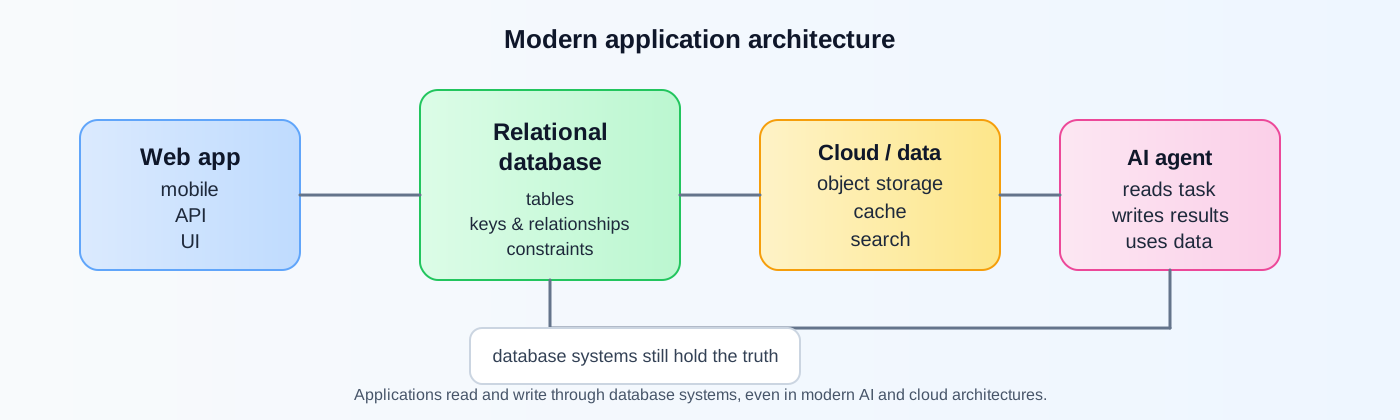
Web apps, cloud platforms, analytics systems, AI applications, and autonomous agents all depend on reliable ways to store, retrieve, relate, and protect data.
This book supplements the course by connecting foundational database concepts with current technologies, application architecture, and practical decision-making.
The course emphasizes transferable database concepts and practical skills rather than mastery of a single database product.
Why this course matters#
Modern software rarely runs without a database behind it.
Whether you are building a web application, working with analytics pipelines, integrating a mobile app, or designing an AI-enabled system, you still need to understand:
how data is structured
how information is stored and retrieved
how records relate to one another
how constraints and integrity protect the system
how applications and databases work together
These ideas remain valuable even as tools change.
What you will learn#
You will develop skills in:
relational data modeling and database design
SQL querying and data manipulation
normalization and data integrity
working with relational and NoSQL databases
choosing database technologies based on application requirements
connecting applications to databases
understanding how databases fit into modern cloud, data, and AI architectures
Course philosophy#
This course is not about memorizing one tool or product.
It is about learning the ideas that remain useful as database technologies evolve:
data modeling
relationships and constraints
querying and updates
integrity and consistency
tradeoffs in system design
Those concepts still matter whether you work with PostgreSQL, SQLite, MySQL, MongoDB, or a cloud-managed data platform.
What this course is designed to do#
The course blends theory and practice so that you can:
understand how databases represent real-world systems
write and reason about SQL queries
design and evaluate simple schemas
compare different database approaches based on requirements
connect database concepts to modern application design
Looking ahead#
As you move through the course, you will see that database systems are not isolated tools. They are part of the larger architecture of modern applications, analytics, and intelligent systems.
The goal is not to master every database product. The goal is to understand the principles that help you choose, design, and reason about data systems intelligently.